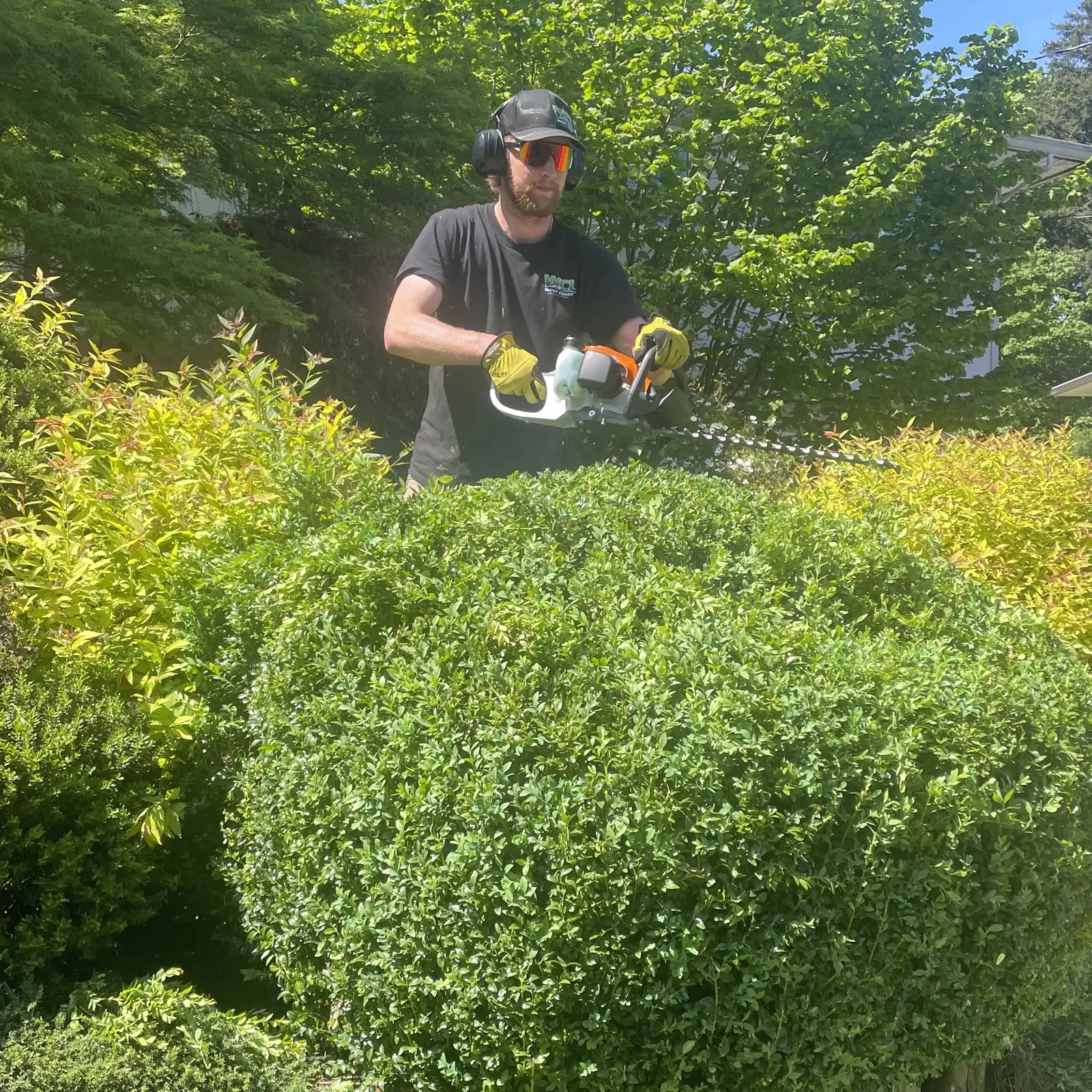
Drive through any Nanaimo neighbourhood — Departure Bay, the Old City, Hammond Bay, Chase River, Cedar — and you'll see how varied the hedges are. The older neighbourhoods have mature cedar privacy hedges that have been there for forty years. Newer subdivisions tend toward boxwood and photinia for tighter lots. Long-time Nanaimo properties often have a laurel hedge that's been overgrown for a decade and is finally getting attention.
Each species needs different handling, and each yard needs a different approach. We trim them all.
Knowing the species you're cutting
Not all hedges respond the same way to a trim. Cedar will not regenerate from bare wood — cut into the brown interior and it stays bare permanently, which is why old cedar hedges that have been left to overgrow are tricky to bring back. Laurel is the opposite: it tolerates hard cuts and bounces back from almost any pruning. Boxwood needs frequent light shaping rather than annual hard trims. Photinia shows its red new growth best when trimmed twice a year. Knowing which is which makes the difference between a hedge that thrives and a hedge that struggles.
We've been working with all of them across Nanaimo for years, and we know what each species can handle in our coastal BC climate.
Equipment that cuts cleanly
Consumer-grade hedge trimmers leave a ragged edge that browns within days. Our commercial trimmers cut cleanly — clean cuts heal, ragged cuts don't. For tall hedges, our extended-reach trimming equipment lets us shape and maintain hedges entirely from the ground, no ladders involved. The combination delivers a cleaner, more precise result and avoids the most common cause of DIY hedge injuries.
For a deeper look at the equipment side and why tall hedge trimming on Vancouver Island isn't a DIY job, that article covers the safety angle in detail.
Nanaimo lots, typical scope
A typical Nanaimo residential hedge trim covers a single property line plus maybe a driveway-side border. That's a few hours of work, a couple hundred kilograms of trimmings, and a clean property at the end. Bigger Nanaimo properties — older Departure Bay lots, larger holdings on the city's edges — sometimes need a half-day or a full day with a crew.
Whatever the scope, the cleanup is total. Every clipping goes in the truck, the truck goes to the composting facility, and you don't have to deal with a mountain of debris in your green bin. That last detail is the one most homeowners don't think about until they're surrounded by hedge clippings on a Saturday afternoon.
Timing matters
Most evergreen hedges in Nanaimo do best with one main trim in late spring after the growth flush, plus a lighter shape in late summer. Deciduous hedges should be trimmed in early summer once the new growth has hardened off. Flowering hedges (forsythia, rhododendron, hydrangea) get trimmed right after they bloom — get the timing wrong and you lose next season's flowers entirely. We handle the timing as part of regular maintenance schedules.
Spring is prime hedge season
If you've been looking at an overgrown hedge all winter, spring is the right time to do something about it. Most species do their best after a late-spring trim, when the new growth is starting but hasn't yet matured. For more on what to cut now and what to leave, our spring hedge and shrub pruning guide walks through the species-by-species timing.
Need to talk through your property? More on what we do across Nanaimo →