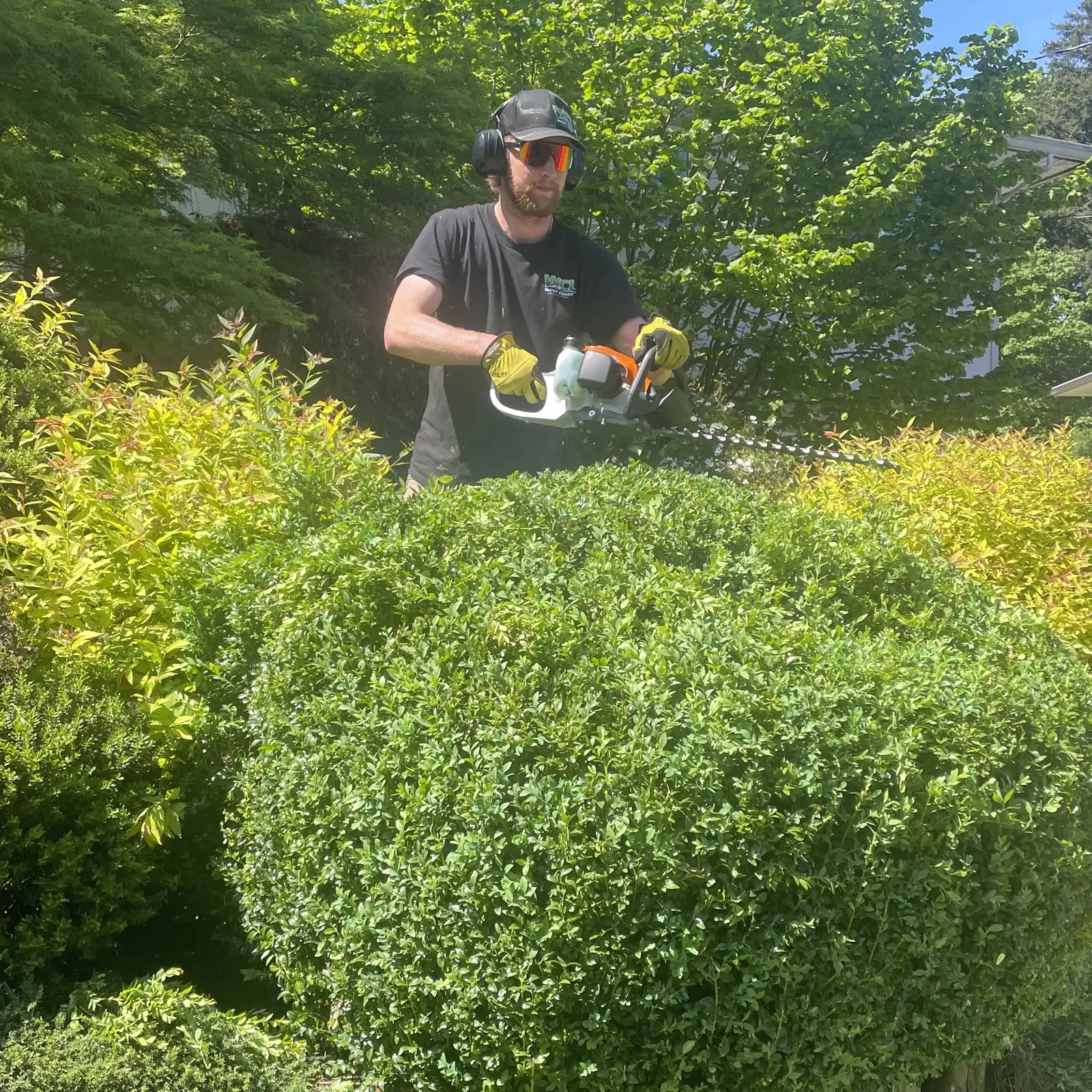
Parksville hedges are a little different. The proximity to the Strait of Georgia means salt-laced wind, sandier soil pockets close to the water, and a slightly drier microclimate than what you'll find in Nanaimo or up in Qualicum Beach. The hedge species reflect that — there's more boxwood, more privet, more salt-tolerant choices, and the laurel hedges that dominate inland tend to look a bit windswept this close to the water.
We trim hedges across Parksville year-round, with extra capacity in the spring as snowbirds return and properties need their pre-season reset.
Vacation properties, scheduled service
A real chunk of Parksville is part-time residences — vacation homes, snowbird properties, family cottages used for summer weeks only. These properties need scheduled hedge maintenance regardless of whether anyone's there to oversee it. We work with absentee owners regularly, doing the trim, photographing the result, and emailing the property report. The owner sees what was done and the property looks ready when they arrive.
Salt and wind change the species mix
Closer to the beach, the hedge species you'll see are different. Boxwood, juniper, salt-tolerant photinia, and certain holly varieties handle the wind and salt better than the cedar and laurel that dominate inland properties. We know which species to push and which to baby on each cut. Salt damage shows up as browning along the windward edge of the hedge — we work around it and shape the hedge to minimize the visual impact.
Tall hedge work, extended-reach gear
Older Parksville properties (especially the original residential streets near the beach) often have tall, mature hedges that need extended-reach trimming equipment. We don't use ladders or scaffolding for hedge work — too dangerous, too slow, and too easy to make mistakes. Our extended-reach gear shapes hedges from the ground with clean, level cuts.
The tall hedge trimming guide walks through why this matters from the safety angle.
Spring is the busy season
By April most Parksville hedges have started their growth flush, and that's when phones start ringing. We schedule hedge trims into May and June and again in late summer for properties that want a second shape before fall. Cedar hedges in particular benefit from this two-pass approach: heavier trim in late spring, lighter touch-up in August.
For the species-by-species timing, see our spring hedge and shrub pruning guide.
What we trim
- Cedar privacy hedges
- Laurel and Portuguese laurel
- Boxwood (formal and informal shaping)
- Photinia and salt-tolerant species
- Tall mixed shrub borders
- Beachfront windbreak hedges
- Flowering shrubs (timing-dependent)
- Vacation property maintenance contracts
Full cleanup, every time
The detail homeowners notice most is the cleanup. A hedge trim isn't done when the hedge looks good — it's done when every clipping is off the property. We collect everything, load it onto our truck, and haul it to the composting facility. No green-bin overflow, no piles for you to deal with.