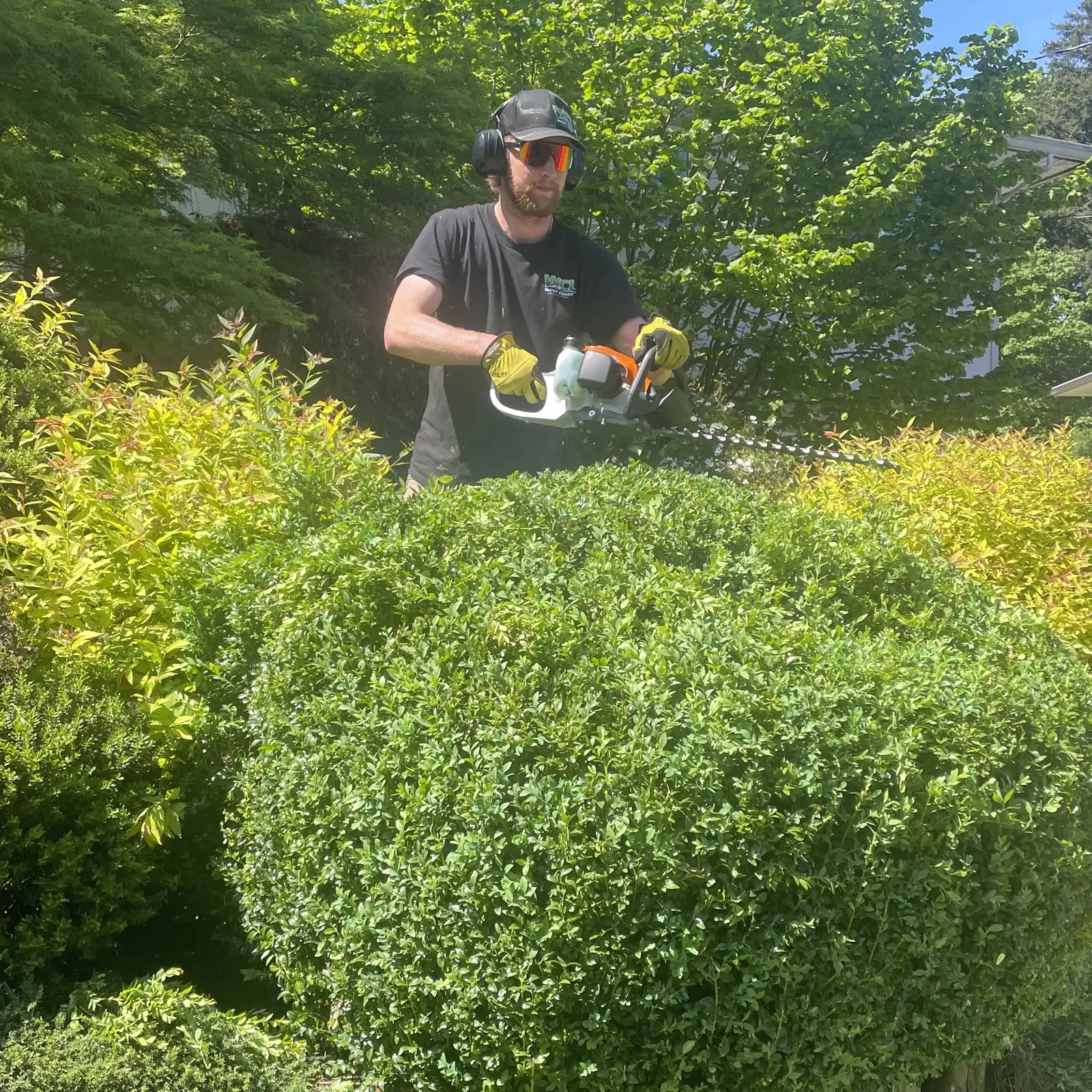
Ladysmith gardens reflect the town's character — older homes, smaller lots, hillside terrain. Many beds are heritage features that came with the home, some are recent additions by current owners, and most are working with the constraints of the slope, the older soil, and the established neighbouring trees that shade or shelter the property. Our job is to maintain them with care for what each garden actually is.
Hillside beds need different care
A garden bed on a slope behaves differently than one on flat ground. Water runs off rather than soaking in, so drought stress is more common. Soil can wash downhill in heavy rain, exposing roots at the top of the bed and burying plants at the bottom. Mulch can shift downslope over time. We work with these realities — choosing slow-release nutrients that don't wash off, applying mulch in a way that holds rather than slides, watching for the early signs of erosion or root exposure.
Character-property gardens
Many Ladysmith homes are heritage character properties with original or near-original landscaping. Old roses. Heritage perennials. Established stone garden walls. Original brick paths. The gardens are part of the property's character, and casual maintenance can erase decades of intentional design. We approach character-property bed work conservatively — clear seasonal debris, maintain the structure, but don't aggressively reshape or modernize what's already there.
Smaller scale, tighter access
Ladysmith lots are typically smaller than what you'll find in Nanaimo or Lantzville, and that changes the bed-work scope. Most jobs are a few hours rather than a full day. The work is more surgical and less voluminous. The access is sometimes harder — narrow lanes, hillside parking, tight side-yard passes. We plan for the access challenges and bring the right gear for each property.
Hand-weeding, no chemical sprays
We don't apply herbicides or chemical weed-control sprays. Hand-weeding at the root, paired with thick mulch coverage and consistent visits, keeps weed pressure low without chemicals. For chemical applications where they're appropriate, owners hire a licensed applicator separately.
For the no-spray approach, see our weed control guide.
The work that keeps beds right
- Edging — clean bed line definition
- Mulching — slope-aware application twice yearly
- Hand-weeding — at the root
- Selective pruning of older perennials and shrubs
- Deadheading to extend flowering
- Heritage variety identification and care
- Stone wall and bed-feature clearance
- Composting facility haul-away
For more on the underlying technique, see our garden bed care guide.
Slope-aware mulching
Mulch application on hillside Ladysmith beds takes a slightly different approach. We avoid heavy single-pass applications that can wash downslope in the first heavy rain. Lighter applications worked into the bed structure, paired with edging that helps hold the mulch in place, lasts much longer than a thick layer that slides off the slope. Bark mulch sometimes works better than cedar on slopes because it knits together more effectively.
Monthly visits, or seasonal
Most Ladysmith garden beds work well on monthly maintenance from April through October. Smaller properties with limited bed footprint sometimes do fine with two big seasonal visits (spring and fall) instead. We recommend monthly when the bed footprint is substantial or when weed pressure is high.