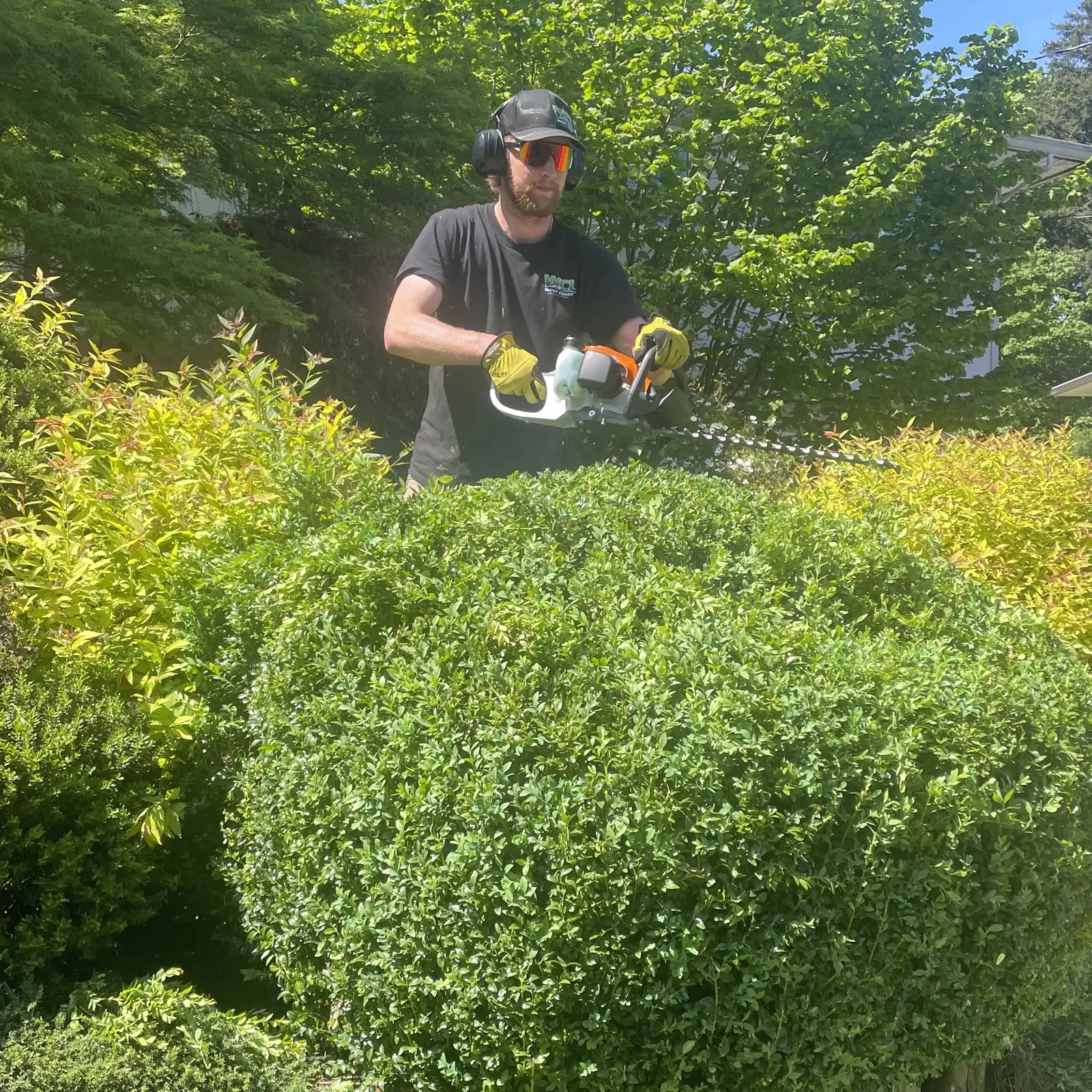
Parksville gardens often look different than what you'll find inland. Drier summer microclimate favours drought-tolerant species. Sandy soil pockets shape what thrives and what struggles. Beachfront proximity means some gardens deal with salt residue and wind. Many properties are vacation homes with absentee-owner schedules. The garden bed care work adapts to all of it.
Drought-tolerant plantings need different care
Many Parksville gardens have shifted toward drought-tolerant species over the years — lavender, sage, rosemary, ornamental grasses, sedums, native plants. These gardens need less aggressive watering, but they need different maintenance: careful pruning timing on woody perennials, deadheading to encourage continued flowering, and a hands-off approach during summer dormancy when many drought-tolerant species look their worst but recover with fall rains.
Salt-aware species near the beach
Parksville gardens close to the beach use plant species you don't see as much inland. Beach grasses, salt-tolerant perennials, hardy seaside species. These gardens need a different maintenance approach — accept the natural shape rather than force formal structure, work with the wind-pruning rather than against it, manage the salt residue that builds up on leaves through the year.
Vacation property bed maintenance
A real chunk of Parksville garden bed work is on vacation properties or snowbird homes. Owners aren't there to address weed pressure, deadhead spent blooms, or notice when something's struggling. Regular monthly maintenance visits keep the beds looking maintained year-round, and photographic property reports after each visit show the owner what was done.
The work that keeps beds looking right
- Edging — clean bed line definition
- Mulching — twice yearly with cedar mulch
- Hand-weeding — at the root, before seeding
- Selective pruning of woody perennials
- Deadheading to extend flowering
- Bed cleanup of leaves and debris
- Salt-residue management on coastal plants
- Composting facility haul-away
For the underlying timing principles, see our garden bed care guide.
Sandy soil amendment
Sandy Parksville soils benefit from organic matter additions over time. We work compost into beds during spring cleanup work, top-dress with organic mulch that breaks down to feed the soil, and recommend specific soil amendments where the bed is struggling because of soil rather than care. Building soil in sandy beds takes years, but the long-term improvement is real.
Weed control, no chemical sprays
We don't apply herbicides or chemical weed sprays. Bed maintenance through physical means — hand-pulling, thick mulch, edge definition, consistent visits — keeps weed pressure low without chemicals. For chemical applications where they're appropriate, owners hire a licensed applicator separately.
See our weed control guide for the no-spray approach.
Monthly schedule recommended
Most Parksville garden beds do best on monthly maintenance visits from April through October. Vacation properties with significant bed footprints especially benefit from monthly visits — small problems get caught and addressed before they compound, and the gardens always look maintained when owners arrive.