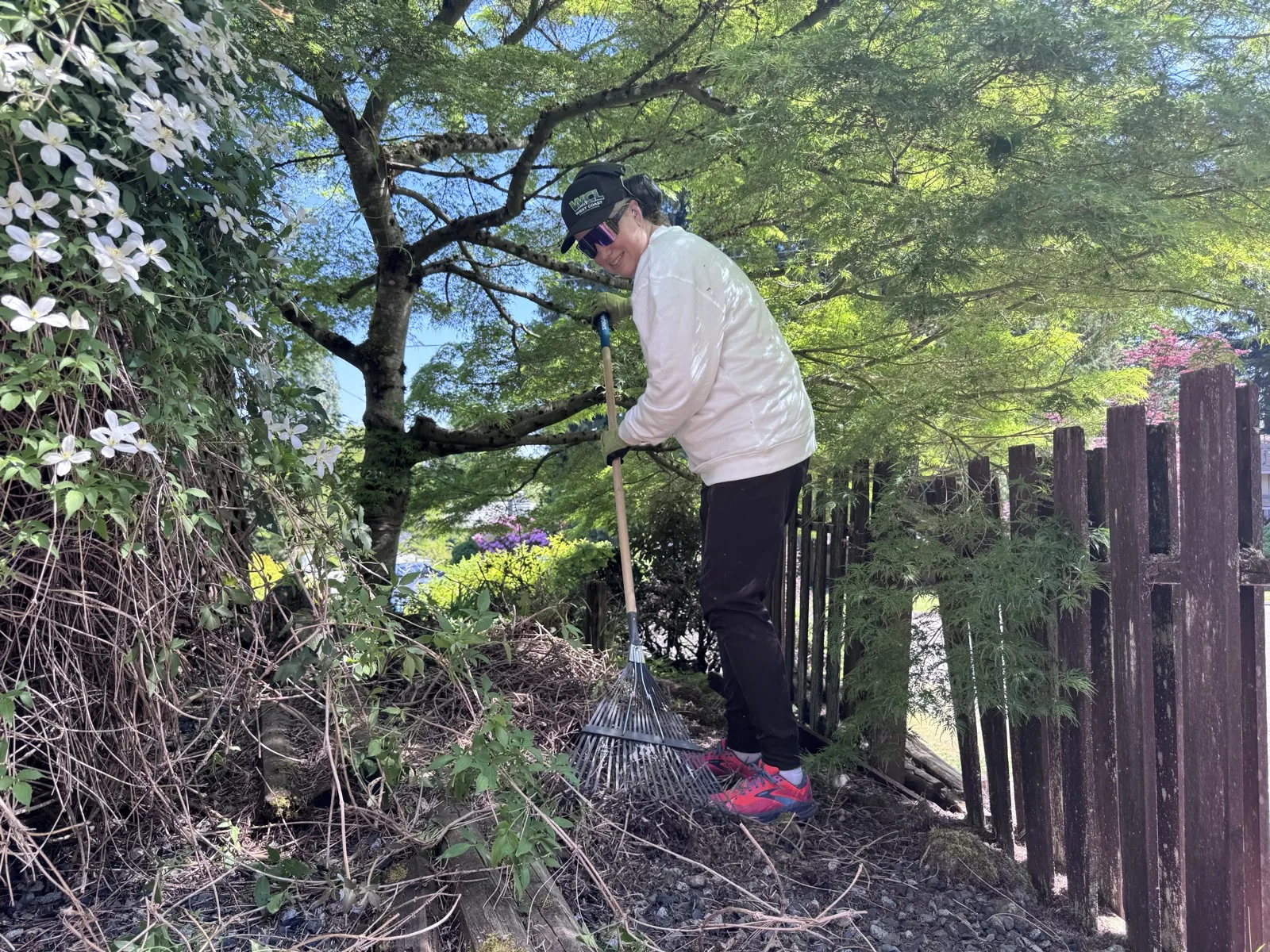
Here on Vancouver Island, fall doesn't arrive politely. One week it's warm and dry; the next, the rains move back in and they don't leave until April. For your lawn and property, that transition is the critical window — get the fall cleanup done while conditions allow, and your property comes through winter in good shape. Miss the window, and you're looking at matted turf, blocked gutters, and a spring cleanup twice as hard.
In Nanaimo and Lantzville, the effective fall cleanup window is roughly late September through October. By November, you're working against steady rain and falling light. The properties that look great every spring are almost always the ones where fall work was done right.
Why Leaves Are More Than an Eyesore
The most visible part of any fall cleanup is the leaves, and it's easy to underestimate how much damage they cause if they stay put through winter. A thick mat of wet leaves sitting on your lawn for months does three things: it blocks light, traps moisture against the grass blades, and creates the warm, airless conditions that fungal diseases love — particularly fusarium patch, which is already a common problem in our climate.
On properties with mature deciduous trees, the leaf volume is staggering. A single large maple or oak can drop enough leaves to cover a lawn several inches deep. On an average Nanaimo property with two or three mature trees, a full leaf cleanup might mean loading and hauling several hundred kilograms of debris to the composting facility. That's not a Saturday morning project with a rake and a few bags — it's a genuine job.
The right approach is to get out there before the bulk of the drop, do an initial clear, then come back once the trees are finished. A leaf blower moves the material efficiently; rakes and tarps haul it. Nothing gets left behind in the beds or along the fence lines, because that's where problems overwinter and emerge in spring.
The Final Mow: Getting the Height Right
Your last mow of the season matters more than most people realize. Cut too short, and the turf is stressed going into its dormant period — it has less energy stored in the blades and is more vulnerable to frost. Leave it too long, and the grass blades mat down over winter, again creating conditions for fungal disease.
For cool-season grasses on Vancouver Island — mainly fescues, ryegrass, and bluegrass blends — the target for the final cut of fall is around 6 to 7 centimetres. That's a bit shorter than the summer mowing height of 7 to 8 centimetres, but not a scalp. The goal is a tidy, firm surface that lets air circulate without leaving long blades to lie flat in the rain.
In Nanaimo and Ladysmith, the last meaningful mow is usually mid-to-late October. The grass slows dramatically once soil temperatures drop below about 5°C, which typically happens in November here. Don't rush the final cut — wait until growth has genuinely stalled.
Clearing the Beds and Cutting Back Perennials
Fall is when the garden beds need attention before winter. This means removing dead annuals that were planted for summer colour, cutting back perennials to a manageable height, and pulling any late-season weeds that have seeded in. Weeds left standing over winter drop seeds into your beds, and you'll pay for it in spring.
Not every perennial wants to be cut to the ground in fall. Some benefit from leaving the stems standing — they provide structure over winter, offer shelter for beneficial insects, and can look striking when dusted with frost. But plants that are known to harbour disease or pests over winter in wet climates — certain roses, dahlias, and susceptible annuals — are better cleared and composted.
A fresh layer of mulch applied to the beds after cleanup does two useful things: it insulates the soil and root systems through any cold snaps, and it suppresses the first flush of spring weeds. Two to four centimetres is enough. Too thick, and you risk holding moisture against the crowns of plants.
Gutters: The Fall Version
We wrote about spring gutter cleaning earlier this year — clearing out the debris that accumulates over winter and early spring before the heavy summer rains. Fall is the other critical cleaning, and in some ways it's more important. Gutters clogged with leaves and seed pods heading into our wet season are effectively broken gutters. Water overflows the channel, runs down the fascia, pools at the foundation, and finds its way into places you really don't want it.
On properties in Lantzville and Nanaimo with mature trees nearby — cedars, alders, maples — fall gutter cleaning should happen after the main leaf drop, usually in late October or November. That timing is a bit uncomfortable because the weather is turning, the rooflines are wet and slippery, and the days are short. It's also when ladders and gutters are genuinely hazardous. A professional crew with the right equipment gets it done safely and completely.
Fall Fertilization: Worth Doing Right
Fall fertilization is one of the most overlooked lawn care tasks, and it makes a real difference. After the long dry summer, your lawn has been under stress. A fall application of a lower-nitrogen, higher-potassium fertilizer helps the grass build carbohydrate reserves in the roots before dormancy — energy it draws on through the winter and that powers the first burst of green growth in spring.
On Vancouver Island, the timing is late September to mid-October. Any later, and the grass isn't growing actively enough to take up and use the nutrients. Granular fertilizer is the right format here — slow-release, applied at the correct rate for your lawn size. Overapplication of nitrogen in fall is a common mistake; it pushes soft new growth that's vulnerable to frost and disease.
Storm Prep and Debris
Along the coast from Ladysmith up through Nanaimo and into Lantzville, fall brings windstorms that can drop significant branches, strip seed pods from alders and birches, and scatter all the careful cleanup work you just finished. Storm prep before the heavy weather season means trimming any branches that are close to the house, clearing the area around drains, and thinking about what could become a projectile in a 90 km/h gust.
After a storm, fast cleanup matters. Branches left on the lawn damage the turf underneath. Debris blocking drains causes pooling. And if you're on a strata property or a managed development in Nanaimo, there are often expectations about how quickly storm cleanup happens — the pressure to be ready is real.
What a Full Fall Cleanup Actually Involves
When people budget for fall cleanup, they often think about an hour or two of raking. The reality on a typical property with mature trees is considerably more. A thorough job — raking and hauling all leaves from the lawn and beds, edging, the final mow, cutting back perennials, clearing the gutters, applying a fresh layer of mulch to the beds — can easily take a full crew half a day or more. The debris volume alone requires multiple trips to the composting facility.
We've done fall cleanups where a single mature maple produced well over 300 kilograms of leaves. Once they're wet, leaves are heavy. You need the right equipment to move that material efficiently — and somewhere to take it.
That's the hidden cost of fall cleanup that DIY timelines don't account for. It's not just the physical work; it's the hauling. Every truckload of debris needs to go somewhere, and dumping loose leaf material isn't straightforward. WCL hauls everything directly to the composting facility, so the property is left genuinely clear, not just tidy-looking.
The result of a proper fall cleanup — a property that emerges from winter with the lawn intact, the beds tidy, and no drainage surprises — is worth the investment. Spring is busy enough without starting it buried in cleanup from November.