One thing newcomers to Vancouver Island figure out by their first July — the summers here are drier than they expected. Nanaimo and Lantzville sit in the rain shadow of the Island's mountains, and once the Pacific weather systems shift north in late spring, weeks can pass without meaningful rainfall. Lawns that looked lush in April can start going yellow by mid-July if the groundwork hasn't been laid.
The good news: May is your window. The decisions you make now — about watering habits, fertilization timing, mowing height — determine how your lawn handles what's coming. Get these right and summer becomes manageable. Get them wrong and you spend July reacting to a lawn that's already in trouble.
Understand the Transition
Vancouver Island lawns live in two distinct seasons. Spring is cool and wet — grass grows vigorously, moss competes aggressively, and your main concerns are disease and drainage. Summer shifts toward warm and increasingly dry, sometimes dramatically so. By late June in Nanaimo, you might go three or four weeks without any rain at all.
The transition between these two phases happens quickly. May is the bridge month, and what you do in that window carries your lawn through to September. Homeowners who treat May like it's still spring and wait until the heat hits to make changes are always playing catch-up.
Train Your Lawn to Water Deep, Not Often
The most important thing you can do in May is establish deep roots before the heat arrives. Roots follow moisture. If you water shallowly and frequently, they stay near the surface — which is fine when water is abundant, but disastrous the first week a dry stretch sets in.
Deep watering means getting moisture down 15–20cm into the soil. A useful test: after watering, push a screwdriver into the turf. If it slides in without much resistance to around 15cm, you've applied enough. For most Nanaimo and Lantzville lawns, that means watering two or three times per week — not a quick spray every evening, but a proper soak every few days.
As May progresses and temperatures rise, the goal is to water less frequently but more deeply each time. Lawns with deep root systems handle two-week dry stretches that leave shallow-rooted turf looking ragged within days.
Time It Right: Water Before Sunrise
Early morning — roughly 5am to 8am — is the right window. The turf absorbs moisture before the day's heat can evaporate it, and the grass blades dry completely during the day. Evening watering leaves grass wet overnight, which is exactly the environment that invites red thread and fusarium patch, both of which are common on Vancouver Island. If you're running an irrigation system, program it to run before sunrise rather than after dinner.
Fertilize in May, Not in the Heat
A lot of homeowners fertilize whenever they remember — which is often July, when the lawn starts looking tired. Fertilizing in summer heat, especially with nitrogen-heavy products, stresses the grass more than it helps it. The plant is already working hard to cope with heat and reduced water; pushing it into new growth at the same time makes things worse.
May is the right window. The grass is actively growing, soil temperatures are good for nutrient uptake, and the feed establishes in the plant before summer stress sets in. By the time the heat arrives, your lawn has already drawn on what it needs — you're not asking it to absorb fertilizer in difficult conditions.
Come September, when the rains return to Nanaimo and Lantzville, is your second fertilization window. That fall application helps the grass recover from summer stress and build carbohydrate reserves before winter. But May is the one that sets up your summer.
Raise the Mowing Height Before Summer Hits
This is the single most impactful adjustment most homeowners can make, and it costs nothing. Taller grass shades the soil, slowing moisture evaporation and making water go further. It also produces a deeper root system and shades out competing weeds naturally.
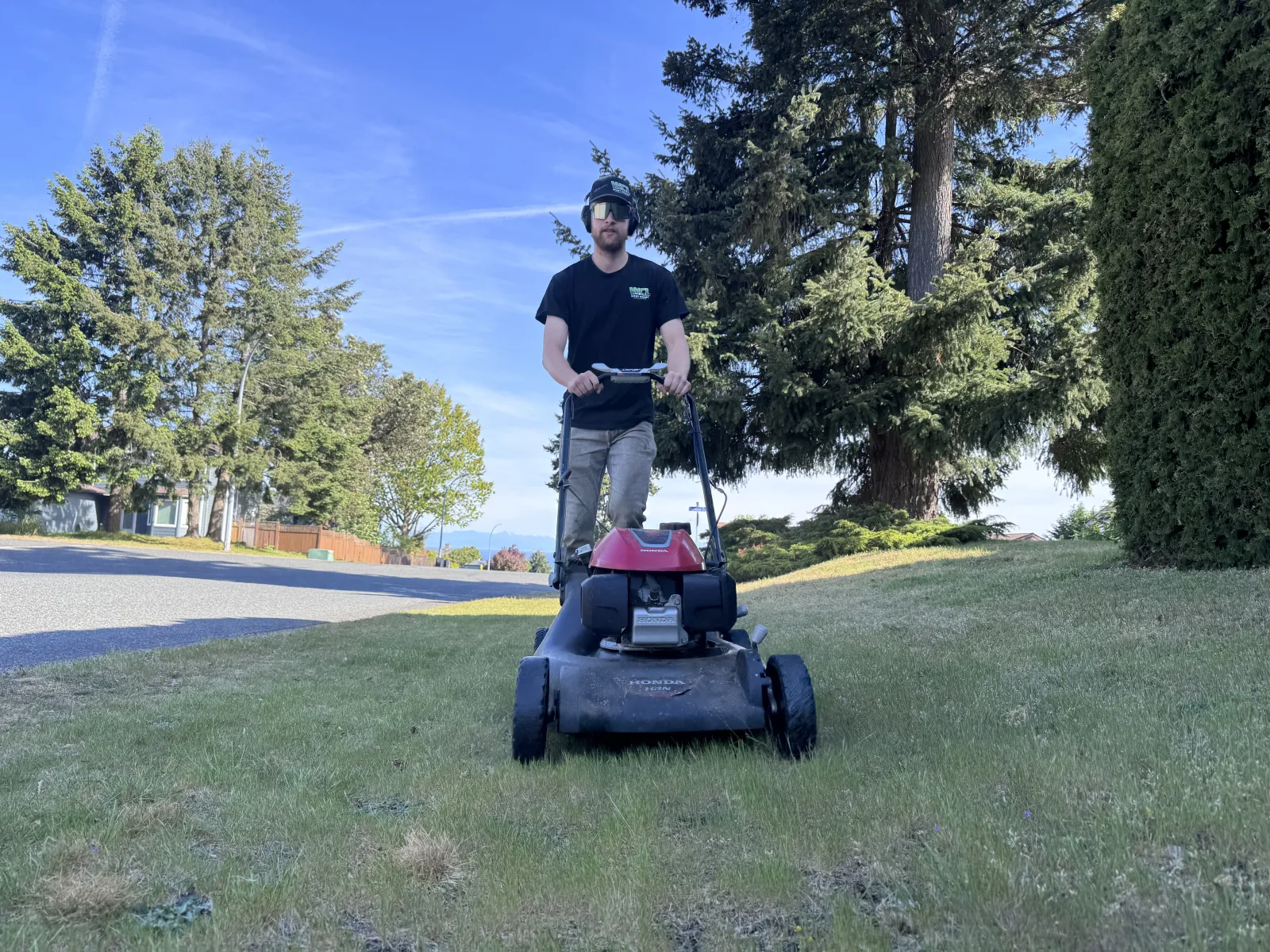
For the cool-season grasses that thrive on Vancouver Island — the bluegrass, ryegrass, and fescue mixes that make up most lawns in Nanaimo, Lantzville, and Qualicum Beach — raise your mowing deck to 7–8cm as you head into summer. If you've been cutting at 5cm through spring, bump it up now. In peak summer weeks, some properties push to 9cm without any issues.
And always cut with a sharp blade. A dull blade tears grass rather than cutting it cleanly, which turns tips brown within 24 hours and creates entry points for disease. Sharpen or replace blades before the heavy mowing season gets underway.
Get Your Irrigation Sorted Now
Whether you run a full irrigation system or rely on hose-end sprinklers, check everything in May while the weather is still cool. A broken head or coverage gap discovered in mid-July means weeks of uneven watering before you catch it — and visible damage well before that.
For those without irrigation, a battery-operated hose timer is one of the better small investments for summer lawn care. They cost around $40, connect directly to your outdoor tap, and water on schedule whether you're home or not. Summer weekends get busy fast — a timer prevents the most common mistake: a two-week stretch of forgetting to water and coming home to half-dead patches.
Oscillating sprinklers typically cover 25–30 square metres. For larger properties — common in Lantzville and parts of newer Nanaimo subdivisions — you'll need multiple placements. Overlap the edge of each coverage area by about 30% to avoid dry strips between zones.
One Last Look at Thatch
If dethatching didn't happen this spring, take a quick look before May gets fully underway. Pull back a handful of turf and check for a spongy, fibrous mat between the grass blades and the soil. More than about 1cm of thatch blocks water penetration — which undermines every other step you're taking to prepare for summer.
Dethatching is most effective when grass is actively growing and can recover quickly. On Vancouver Island, that window is closing by late May. If there's meaningful buildup, address it now rather than waiting until fall.
The Payoff
A lawn prepared through May doesn't require heroic measures come July. It holds its colour longer into dry stretches, recovers faster when rain does arrive, and needs less intervention overall. These aren't complicated changes — they're mostly about timing. Doing the right things in May instead of reacting in the heat of summer makes the whole season easier, for you and your lawn.
The difference between a lawn that looks good all summer and one that struggles isn't usually genetics or luck. It's usually what happened in May.